Have you ever wondered why some decks cost around $1,500 while others run over $25,000? It might surprise you that almost half of the total cost comes from the materials alone. In this guide, we clearly break down the numbers for pressure-treated wood, cedar, composite, and other options. We keep things simple so you can see exactly where your money is going and steer clear of any unexpected expenses. If you're set on building a deck that looks great without breaking the bank, read on for easy, step-by-step cost insights.
DIY Deck Build Cost Estimate: Quick Materials Price Overview
When building a deck yourself, the materials usually make up about half the total cost. For a typical project, you can expect to spend around $8,000 nationally. Some DIY decks may cost as little as $1,500, while high-end designs might be over $25,000. This guide helps you plan your budget without getting bogged down by details.
The cost of decking materials depends on your choice. Pressure-treated wood costs about $3 to $6 per sq ft. Cedar comes in at about $4 to $8 per sq ft. Redwood usually runs around $7 to $12 per sq ft. Composite decking typically costs between $5 and $14 per sq ft. Premium hardwoods may cost $10 to $20 per sq ft. These figures allow you to plan your budget more confidently.
Always include an extra 10% to 15% of materials in your plan. This cushion covers off-cuts, measurement mistakes, or any special design features. Use the table below for a quick look at common material costs:
| Material | Cost Range (per sq ft) |
|---|---|
| Pressure-treated wood | $3–$6 |
| Cedar | $4–$8 |
| Redwood | $7–$12 |
| Composite | $5–$14 |
| Premium hardwood | $10–$20 |
These estimates help you plan your spending as you design your deck. For more detailed instructions on building your deck, check out "How to Build a DIY Deck".
Deck Build Cost Estimate: Calculate Your Material Quantities

Start by measuring your deck's length, width, height, board size, and spacing. Enter these numbers into a deck material calculator to figure out how many deck boards, joists, posts, fasteners, and railings you need. For instance, if your deck is 12 ft (3.66 m) by 10 ft (3.05 m) with 6 in (15 cm) wide boards spaced correctly, the calculator will tell you the number of boards required.
It is wise to add an extra 10–15% of material. This cover helps account for mistakes, off-cuts, or special design features in projects with stairs and railings. Without this buffer, you might run short later on.
Follow these steps:
- Measure your deck dimensions accurately.
- Enter the board size and desired spacing into the calculator.
- Check the counts for framing pieces such as joists and posts.
- Add a 10–15% overage to the total material counts.
This approach helps you avoid extra expenses later and ensures you have enough material from the start. Accurate measurements and proper planning keep your deck project on track without wasting money or time.
Deck Build Cost Estimate: Framing and Foundation Material Expenses
Your deck frame forms the backbone of the project. It includes pressure-treated posts, beams, joists, joist hangers, and post anchors. We use pressure-treated lumber because it is affordable and strong, which makes it a smart choice when budgeting.
Pressure-treated lumber keeps costs down and offers the durability you need for a lasting deck. This lets you spend more on finishing touches while still enjoying a sturdy structure.
If you decide to try other materials like engineered wood, steel, or aluminum, keep in mind these options usually cost 20–50% more. They offer extra benefits such as improved straightness and resistance to seasonal changes, which might be worth the extra cost for a cleaner look and less movement over time.
Hardware like connectors and brackets is also key. Prices for these items can range from $0.50 to $5 each. Picking the right ones (especially those with good corrosion resistance) helps ensure your deck stays secure.
Lastly, solid deck footings are essential to support everything. For more guidance on creating a strong foundation, check out Deck Footings.
Deck Build Cost Estimate: Surface Decking and Finish Costs
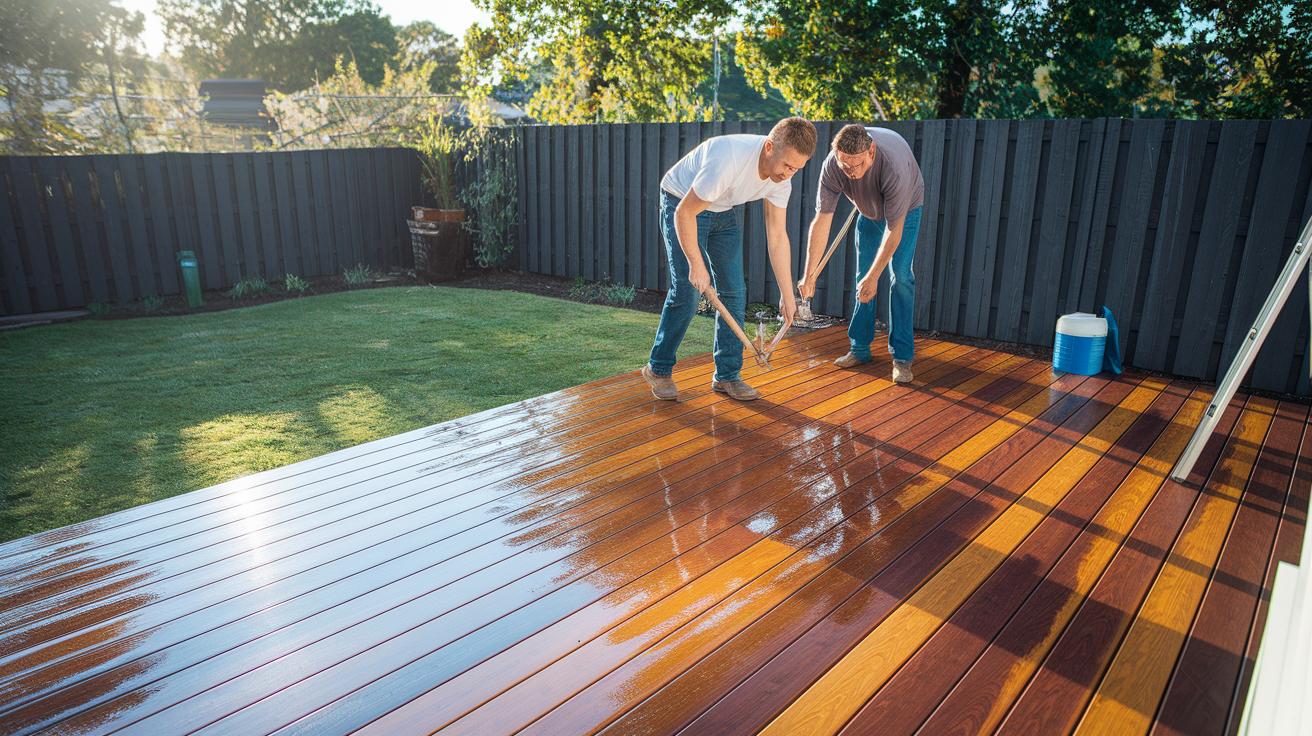
Protective finishes shield your deck from moisture, UV rays, and rough wear. Sealants and stains boost your deck's look and extend its life. A good finish helps cut down on repairs over time.
Sealants run about $1–$3 per square foot, and stains cost roughly $1.50–$4 per square foot. A quality treatment keeps wood safe from decay and weathering, which is key for decks that need annual touch-ups. Even composite decks benefit from a proper finish, gaining extra protection and curb appeal.
For instance, treating a 200 sq ft deck with both sealant and stain costs around $500. This upfront cost can save you money on maintenance over the next decade, especially if you use high-maintenance wood.
When picking a finish, think about your deck's material, your local climate, and how often you want to perform upkeep. For high-traffic areas, a tough, UV-resistant stain works best. In quieter spots, a sealant alone might be enough to preserve the natural look.
Deck Build Cost Estimate: Hardware, Railings, and Accessories Pricing
Fasteners and connectors are essential for building a deck. They cost between $0.10 and $0.50 per piece, depending on the gauge and any protective coating you choose. For example, if you decide on fasteners priced at $0.25 each, your budget becomes straightforward and easy to manage.
Railings not only boost safety but also give your deck a nice look. A standard railing system usually costs between $25 and $60 per linear foot and helps define your deck area. Meanwhile, stairs are a major part of the project. Depending on their design and complexity, stairs can add from $500 to $5,000 to your total deck cost. Think of stairs as the entry highlight that sets the tone for your deck.
Other features can also add both function and charm. Built-in seating typically runs between $500 and $2,000. Deck lighting may cost anywhere from $100 to $5,000, and exterior trim and skirting usually range from $2 to $5 per linear foot to complete the finished look.
| Component | Price Range |
|---|---|
| Fasteners and connectors | $0.10–$0.50 per piece |
| Railing systems | $25–$60 per linear foot |
| Stairs | $500–$5,000 |
| Built-in seating | $500–$2,000 |
| Deck lighting | $100–$5,000 |
| Trim and skirting | $2–$5 per linear foot |
Deck Build Cost Estimate: Permits, Preparation, and Contingency Fees

Permit fees may range from $50 to $500, depending on your local rules. For example, one permit might cost $75, while another location could charge much more. Be sure to include these fees in your overall budget planning.
Site work can add extra costs. Clearing the area, grading, and any demolition might cost between $600 and $1,000. If your deck is raised or has multiple levels, you may also need special footing and drainage work, which will increase the cost further.
Remember that prices can change by region. Sometimes, doing work in late fall or winter may earn you a 10-20% discount on contractor fees or rentals.
It’s wise to set aside a contingency fund of 10-20% of your total project cost. This extra budget helps cover surprises during construction. Planning for permits, site work, and unexpected costs can keep your DIY deck build on track.
Deck Build Cost Estimate: Budgeting Tips and Cost-Saving Strategies
Plan your deck budget by listing your costs early and keeping track of expenses every week. A great tip is to get at least three quotes for bulk lumber and hardware. For example, call three local suppliers, compare their prices, and pick the best deal. This method helps you notice price differences in your area and secure savings.
Talk with suppliers about volume discounts and seasonal rate cuts. Buying your materials before peak times can help you avoid price hikes. For example, purchasing in the off-season might save you 10–20% compared to summer prices. Always compare different vendors, as neighborhood suppliers might offer lower prices than larger chains.
Keep a close record of your spending with a simple budget template. List costs like materials, savings from doing the work yourself, and any extra upgrades. Tip: reserve an extra 10–20% of your budget for unexpected expenses.
For an easy overview of all costs, consider using a budgeting worksheet like the DIY Project Budget Template (https://alphapix.org?p=109).
- Check local market trends
- Compare several supplier quotes
- Plan your purchases early
These practical tips can help lower your deck build expenses and keep your spending on track.
Final Words
In the action, we broke down costs from material price lists to detailed quantity calculations. We covered framing, surface decking, hardware, and even permits and preparation. Each section gave clear insights and step-by-step pointers for estimating expenses. The guide shows that a detailed deck build cost estimate (DIY materials breakdown) can keep your project on track. Tackle your project confidently with these practical tips and budget strategies, and enjoy the process of building something that truly works for you.