Have you ever noticed how a few simple fixes can brighten up your home? Many think that expensive professionals are always needed for repairs, but small projects like sealing air leaks or fixing a leaky faucet go a long way.
DIY home repairs let you learn new skills, save money, and keep your space cozy and safe. Give it a try, and you'll soon see your home work better every day.
There's real satisfaction in watching basic improvements add up, one small project can bring instant home improvement joy.
Essential DIY Home Repair Projects for Common Household Issues
DIY repairs help you save money while making your home work better. When you handle small fixes yourself, you lower costs and keep minor issues from becoming major problems. You also learn new skills, improve safety, and make your space more comfortable. Even simple tasks like sealing air leaks can cut up to 30% of heat loss.
- Fix a leaking faucet in your kitchen or bathroom.
- Unclog sinks or shower drains.
- Silence squeaky floorboards.
- Repair a toilet that keeps running.
- Patch small holes and dents in drywall.
- Replace worn weatherstripping around doors and windows.
- Adjust or lubricate sticking windows and doors.
- Renew old caulk in tubs, showers, and sinks.
By tackling these repairs, you boost your home's look and function. Each project helps save energy and keeps your home running smoothly. Quick fixes extend the life of your fixtures and lower your energy bills. With every repair, you gain confidence and save money, making home maintenance a simple part of daily life.
DIY Home Repair Projects Toolkit: Tools and Materials Overview
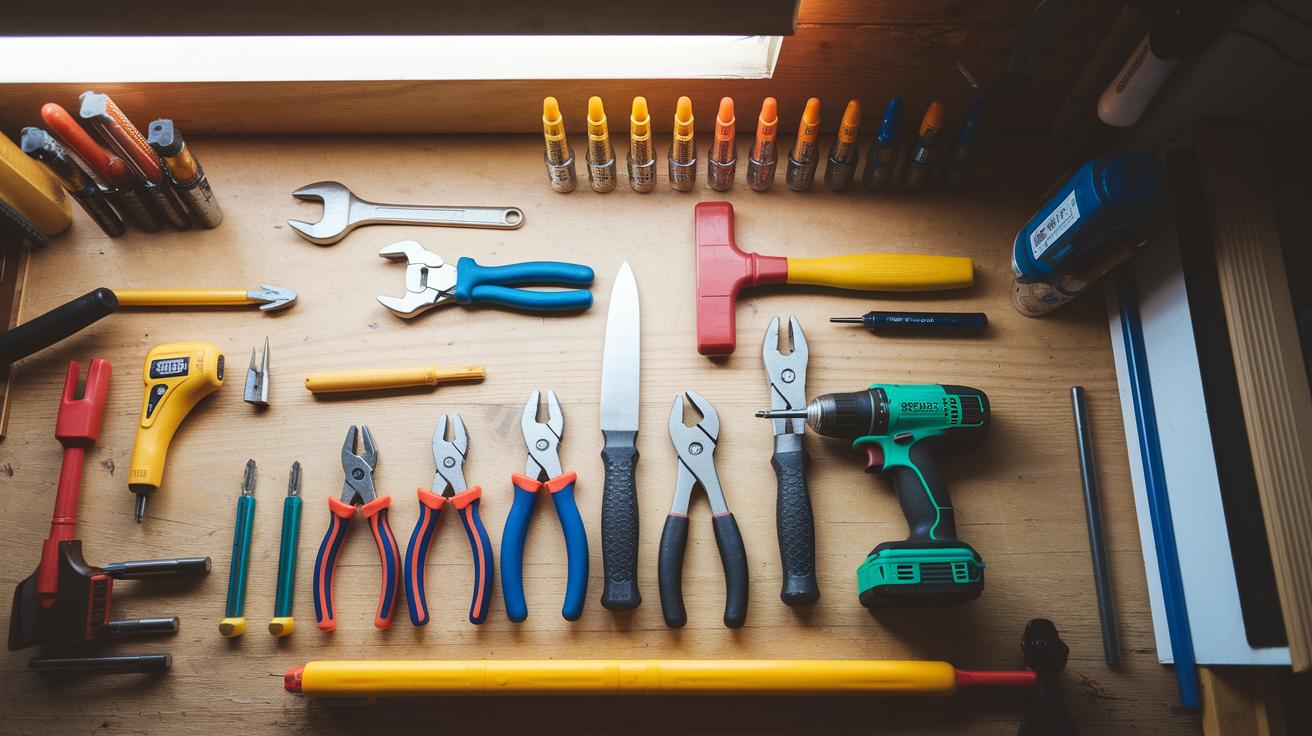
Your toolkit is the heart of every home repair job. When you have the right tools handy, work goes faster, and you feel more confident handling fixes around your home. With the proper supplies, everyday repairs become simple and affordable.
A good toolkit covers different jobs. For example, an adjustable wrench and slip-joint pliers help you grip and turn nuts and bolts. A set of Phillips and flat-head screwdrivers makes working with screws easier, and a claw hammer is great for both driving and pulling nails. A utility knife lets you cut through materials, while a caulk gun creates a clean, lasting seal. A cordless drill with a bit set speeds up putting things together or taking them apart. And when it comes to clearing clogs, a small drain snake does the trick. Always add work gloves and safety goggles to your kit to keep yourself safe.
A basic starter kit usually costs between $50 and $200. Extra supplies like drywall patch kits, faucet washers, and plumber’s tape typically run between $3 and $15 each.
Safety Precautions for DIY Home Repair Projects
Always put safety first on any repair project. Wear your work gloves, safety goggles, and a dust mask when you are sanding, cutting, or using chemicals.
Start by following lock-out/tag-out procedures. For example, turn off the power at the breaker before doing any electrical work. When working on plumbing, close the valve to shut off the water. A quick check to make sure all switches are off can help prevent accidental shocks or water damage.
Take extra care with specific hazards. For plumbing repairs, double-check that the water is off and there is no flow before you start. For electrical tasks, even small fixes demand caution. If you are unsure about handling wires, please review electrical safety tips for DIYers. Avoid doing major structural repairs like changing load-bearing walls or roof work on your own, as these can be very risky.
Always use a stable ladder and work in a well-ventilated area when working with chemicals. For extra peace of mind, consider asking a certified home inspector to perform mold and radon tests during your routine safety check.
Step-by-Step DIY Home Repair Projects: Detailed Guides

For a leaky faucet, start by turning off the water at the valve. Use a screwdriver to remove the faucet handle. Replace the worn rubber washer with a new one (costing about $5–$10). Then, put the parts back together and test the faucet to make sure it doesn't leak. This repair takes about 30 minutes and only requires basic tools. Keep a towel nearby to catch any drips.
To patch a hole in drywall, begin by cutting out the damaged area with a utility knife. Spread a setting compound over the cut area with a putty knife, and embed some mesh tape into the compound. Smooth out the edges, allow the compound to dry, and then sand it until it feels even before repainting. This repair usually takes about 1 hour with supplies costing around $5–$15. Use smooth, even strokes for a clean finish.
For a clogged drain, feed a drain snake past the trap and turn it to catch debris. Pull the snake out and then flush the drain with hot water mixed with a mild cleaner. This quick fix generally takes 30 minutes and costs about $10–$15 for the snake and cleaning supplies. Also, check the trap for any stubborn blockages.
To quiet squeaky floorboards, first locate the underlying joists. Drive trim-head screws through the boards so they attach to the joists. Next, fill the screw holes with wood filler. This step stabilizes the boards and reduces the noise. The project usually takes 1–2 hours and costs around $5–$20, and it helps to have someone steady the board if needed.
For re-caulking a shower, remove the old caulk with a utility knife. Clean the surface well, then apply a fresh bead of silicone caulk using a caulk gun. Smooth the bead neatly and let it cure for 24 hours before using the shower. This task takes about 1 hour and costs roughly $5–$10 in caulk and supplies. Work carefully to avoid bubbles in the new caulk.
Troubleshooting and Cost Estimation for DIY Home Repair Projects
When you plan a DIY repair project, comparing cost estimates helps you budget and find any mistakes early. Knowing how much you might spend on materials and tools shows if the repair fits your budget or if you need to tweak your plan.
| Project | Materials Cost | Tool/Rental Cost | Typical Time |
|---|---|---|---|
| Leaky Faucet Repair | $8 | $0 | 30 min |
| Drywall Patch Repair | $10 | $0 | 1 hr |
| Drain Unclogging | $0 | $15 | 30 min |
| Re-Caulking Shower | $5 | $0 | 1 hr |
If a repair does not solve the problem, these signs can help you figure out what to do next. For example, if your faucet keeps leaking, the valve seat might be worn or corroded. A drywall patch that fails might mean the joint compound did not dry fully or was not spread thinly enough. When a drain snake does not remove a clog, a stubborn blockage could be the cause and might need a chemical cleaner or a pro’s help. And if your new caulk does not stick well, it may be because the surface was not cleaned or prepped properly.
Keep these hints in mind. They can help you change your approach or decide if it's time to call an expert.
Planning and Next Steps for DIY Home Repair Projects

Seasonal planning helps keep home repairs from feeling overwhelming. Group your fixes by season. For example, do an exterior check in spring after winter or focus on weatherproofing in fall. Try breaking small repairs into sessions over 2–4 weekends so you can gather supplies and avoid burnout.
A printed checklist makes the job easier. It helps ensure you have all the tools, materials, and safety gear for each task. Checking off each step means you won't forget anything and can plan your work and budget better. You might also note when tasks are finished and mark any follow-up work needed as the seasons change.
Download the DIY project planning checklist and set a date for your next repair session. This way, your home stays well-maintained and energy efficient.
Final Words
In the action, this guide walked you through essential fixes like repairing leaky faucets, patching drywall, and silencing squeaks. It gave clear steps, tool tips, and safety advice so you can tackle each project with confidence. The post broke down common repairs and planning tips to keep your workload manageable and your home energy efficient.
Take these insights to plan and complete your diy home repair projects with a positive attitude and steady progress.
FAQ
Q: What are some DIY home repair projects on a budget for beginners?
A: The DIY home repair projects on a budget for beginners include fixing leaky faucets, unclogging drains, patching drywall holes, and replacing weatherstripping. These tasks help save costs while building confidence.
Q: What are some small home improvement projects that make a big impact?
A: The small home improvement projects that make a big impact involve repairing dripping faucets, silencing squeaky floorboards, patching minor drywall dents, and renewing caulk. These fixes enhance energy efficiency and comfort.
Q: What is the 30% rule for renovations?
A: The 30% rule for renovations refers to the fact that drafts around doors and windows can cause up to 30% of a home’s heat loss. Addressing weatherstripping and caulking can significantly boost energy efficiency.
Q: What home repairs can I DIY and which tasks are best left to professionals?
A: The home repairs you can DIY include fixing leaky faucets, unclogging drains, repairing running toilets, and patching drywall. Complex electrical, gas, or structural repairs should be handled by a professional.
Q: Is $50,000 enough to renovate a home?
A: The $50,000 budget can be enough for moderate renovations or targeted repairs, especially in smaller homes. The scope of work and quality of materials needed will determine if this budget is sufficient.
Q: What simple DIY projects can students try?
A: The simple DIY projects for students often include patching small drywall holes, reapplying caulk around sinks, and unclogging drains. These projects are low-cost, practical, and ideal for beginners.