Have you ever wondered what your home project might cost? You’re not alone. It can be tricky to estimate expenses, but knowing your budget helps keep your project on track and prevents surprises. In this guide, we explain different ways to calculate costs, like unit pricing and contractor quotes. We also show how each method works for projects of various sizes so you can better manage your spending.
Overview of Home Improvement Cost Estimation Methods

Accurate cost estimates help you plan your budget, avoid surprises, and make sure you have enough funds to finish your project on time. They also show you clearly how money is being spent and allow you to compare bids from professionals.
There are several methods to estimate costs, depending on your project's scale:
- Unit Pricing Method – cost per material or labor unit.
- Square Foot (Budget) Method – multiply the area by a cost coefficient.
- Rule of Three – a quick per-square-foot multiplier.
- Rule of Two – a simple adjustment to the base estimate.
- Comparative Budgeting – compare with similar local projects.
- Contractor Quotes – detailed, line-item offers from professionals.
- Technology-Driven Tools – calculators that use historical data and local trends.
When choosing a method, consider your project's size and complexity. For smaller jobs or when you need a quick estimate, the Unit Pricing or Square Foot methods work well. Bigger projects with many details might require Comparative Budgeting or detailed Contractor Quotes. Technology-driven tools can also help refine your estimate by using past data and regional trends. Matching the right approach to your project ensures a solid budget and less financial uncertainty during your home improvement process.
Unit Pricing Method for Home Improvement Projects

Unit Pricing assigns a fixed rate to each work unit. For example, you might see $2.50 per square foot of drywall or $45 per labor-hour. This approach helps break your project into smaller, clear pieces, making it easier to plan and budget.
Here’s how to use the Unit Pricing method:
- Collect the unit rates for every part of your project.
- Count the number of units needed for each task.
- Multiply the unit rate by the quantity to get the cost for that task.
- Add up all the costs to get your total estimate.
For instance, if you need 100 square feet of drywall at $2.50 per square foot, multiply 100 by 2.50 to get $250.
This method saves time with its quick and repeatable steps. Just be sure to use accurate unit rates, and remember that unique or one-off costs might not fit perfectly into this system.
Square Foot (Budget) Method for Renovation Cost Estimates

The Square Foot Method gives you a quick way to estimate your renovation costs. Multiply the total area of your project in square feet by a set cost per square foot. For instance, if you have a 200 sq ft kitchen and use a rate of $300 per sq ft, your estimate would be $60,000. This method is best for early budgeting when you can accurately measure the area.
When you use this approach, pick the right cost number for your project. Use a lower rate for simple jobs like painting. Use a higher rate for full gut renovations that use upscale materials. Remember, prices for labor and supplies can vary a lot by region. Also, if you plan to add higher-end finishes or upgraded fixtures, the cost will go up. This method gives you a rough number early on, but you may need more detailed information for a final budget. Always measure twice and check local pricing to keep your estimate realistic.
Quick Rule-Based Cost Estimation Methods

Sometimes you need a fast cost estimate when you’re in the early planning stages. Two simple methods can help: the Rule of Three and the Rule of Two.
-
Rule of Three: Multiply the total square footage by a fixed rate per square foot.
For example, if you have 150 sq ft and use a rate of $250 per sq ft, your rough estimate is 150 x 250 = $37,500. This method works best when your project uses similar materials and finishes. It gives you a quick, clear number. -
Rule of Two: Start with a base cost and then double it to cover any surprises.
Begin with an accurate base cost. Then, multiply that number by 2. This extra step helps cover unforeseen expenses or design changes. It adds a simple safety buffer to your estimate.
Both methods are quick and simple. Choose the Rule of Three for a straightforward calculation or the Rule of Two if you need to plan for extra costs. Pick the approach that best fits the scale of your project and the worries you have about unexpected expenses.
Comparative Budgeting and Local Benchmarking for Home Upgrades

-
Start your research by checking local permit records, online community boards, and talking with nearby contractors. These sources can show you real examples of renovation costs in your area.
-
Next, split your costs into two groups: professional services (like labor and expertise) and items you buy (materials and supplies). Compare your figures with similar projects in homes of the same size and finish level. Keep in mind that a full remodel will cost more than a simple update. Adjust your list if you plan to use higher-quality materials.
-
Finally, record all the data in a detailed log or spreadsheet. Update your records as you find new local projects or changes in the market. This regular review will help you keep your budget accurate for future upgrades.
Requesting and Analyzing Contractor Quotes for Home Projects

Start by creating a clear scope document. Write down room measurements, material details, and project timelines. List every task, finish level, and any special challenges. This helps the contractor see your vision and avoid miscommunication.
Next, ask at least three professionals for detailed quotes. These can include contractors, architects, or designers. Request that each quote shows labor fees separate from material costs. Set up a site visit so each expert can see the project conditions. Ask about any unusual charges and make sure every quote follows your scope document.
Finally, compare the bids side by side. Use a simple checklist to see if each quote covers every item. Look for any missing details or unexpected high costs. This review helps you choose fairly and with confidence.
Technology-Driven Cost Estimation Tools for Home Improvement

Digital cost estimation tools work fast to help you plan your projects. They use real data from many home renovations to set up accurate budgets. These tools let you spot small changes, compare past jobs, and update your numbers as market prices shift. This means you can avoid costly mistakes and save time whether you're a DIYer or a pro.
When you pick a digital tool, check for options that let you adjust costs for materials, labor, overhead, and permits to fit your project. A good tool shows local pricing data and makes detailed reports you can export. It should also work well on mobile so you can update figures on the go, sync data between sites, and track trends in real time. Try a DIY budget template first. It lets you compare the tool’s numbers with your own calculations so you can be sure it meets your needs.
DIY Step-by-Step Process for Home Improvement Cost Estimation
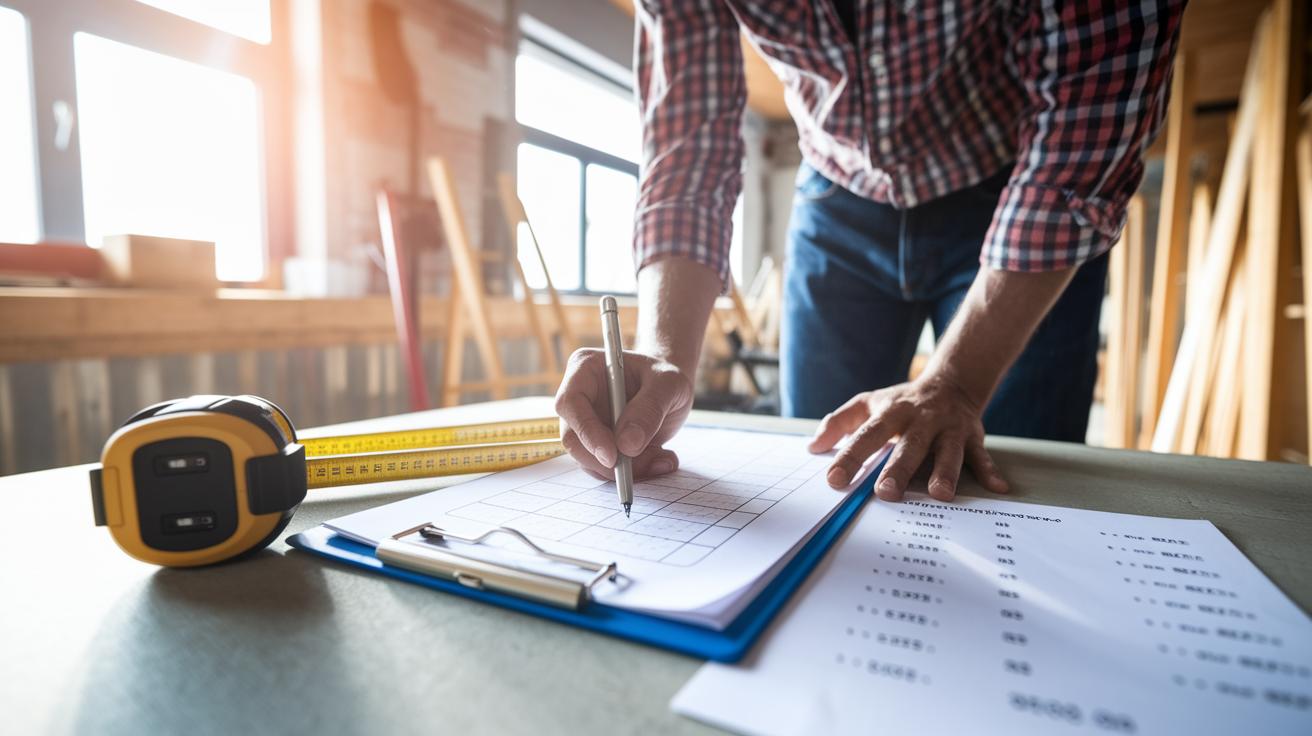
A clear process helps you stay on track and keep your budget in check. It makes sure you look at every detail, from taking measurements to sorting out final prices. A good plan will let you compare bids, manage costs, and adjust if things change.
- Check the work area and measure each section carefully.
- List out all the tasks and improvements you need.
- Write down the supplies you will use and look up their current prices.
- Calculate labor costs by figuring out the hours needed and using standard rates.
- Add extra costs like permits, insurance, and any tool rentals.
- Pick a profit margin that fits your project, market trends, and budget goals.
- Put together a complete estimate that shows costs for supplies, labor, extras, and profit.
Review your work to make sure you did not miss anything. Re-check every step and update for any price changes or design tweaks. Keep a clear record of your final estimate and use this DIY project planning checklist (https://alphapix.org?p=105) to help you stay on budget.
Final Words
In the action, we explored clear and practical methods to predict project expenses accurately. We broke down techniques like Unit Pricing, the Square Foot Method, quick rule-based strategies, local benchmarking, contractor quotes, and technology-driven tools.
This overview helps you choose cost estimation methods for home improvement projects that match your project’s scale and accuracy needs. Tackle your next project with confidence and keep your budget on track.
FAQ
Frequently Asked Questions
What are cost estimation methods for home improvement projects free?
The phrase cost estimation methods for home improvement projects free refers to available techniques like unit pricing, square foot methods, rules of three or two, comparative budgeting, contractor quotes, or digital tools that help plan your budget without extra cost.
How can I find a project cost estimation example PDF?
A project cost estimation example PDF provides a sample document that uses clear formulas and sample figures to illustrate budgeting methods, helping you understand how to structure your own detailed home improvement estimate.
What is construction estimating for dummies?
Construction estimating for dummies simplifies the process by breaking down complex calculations into clear steps, using simple techniques such as unit pricing and basic Excel formulas to make budgeting accessible for beginners.
Where can I find a construction estimate PDF?
A construction estimate PDF serves as a template detailing labor, material, and overhead costs, offering a clear format that you can follow or adapt for your home improvement projects to ensure accurate budgeting.
How does a construction cost estimate example help me budget?
A construction cost estimate example helps you budget by showing real-life figures and methods, allowing you to apply similar calculations to your project and balance quality with cost efficiency during planning.
How can I create a cost estimate construction Excel?
Creating a cost estimate construction Excel involves listing materials, labor, and overhead costs, using formulas to multiply unit rates by quantities, and summing totals for a detailed and easily adjustable project budget.
What are basic cost estimation techniques in project management?
Basic cost estimation techniques in project management include using methods like unit pricing, square foot calculations, and benchmarking against similar projects, ensuring practical and accurate budgeting for home improvement work.
Is there a recommended construction estimating book?
A recommended construction estimating book offers detailed guidance, practical examples, and industry tips, making it a valuable resource to master budgeting techniques and improve accuracy in planning renovation or construction projects.