Ever wonder if your deck can do more than just sit there? You can turn it into a lively spot with dining, lounging, and even a small bar area. This guide shows you simple steps to measure your deck, note any fixed features (things that stay in one place), and create zones that invite friendly chats. Try using modular seating (movable seating setups) and clear walkways. Soon, your deck becomes a fun and flexible retreat to enjoy summer nights like never before.
Outdoor Deck Furniture Layout Ideas: Fresh & Fun
Start by splitting your deck into clear zones. Decide where you want a dining area, a lounge space, and a small bar spot. Measure your deck’s length and width in feet (or meters) to know its total area. Notice fixed features like fire pits, water features, or grill stations to shape the layout. For example, if you have a fire pit on one side, set the seating around it to form an inviting circle.
Modular sectionals make it easy to mix comfort with flexibility. You can rearrange them into L-shapes or U-shapes to fit your needs. Place a sectional near railings and keep about 2-3 ft (0.6-0.9 m) of clear space for smooth traffic. This setup allows you to change the arrangement as your plans evolve over the summer.
Consider these steps to create a practical layout:
- Measure your deck space and list any fixed structures.
- Mark out distinct zones like dining, lounging, and bar areas.
- Position modular sectionals where conversation flows easily.
- Choose furniture that moves around without losing style.
- Avoid using outdoor rugs under dining tables to keep cleaning simple.
A design that blends easy maintenance with visual appeal brings extra charm to your outdoor seating. For instance, skip a fixed outdoor rug under the dining table and opt for a movable striped umbrella. It gives you shade and a burst of color. This way, your deck stays flexible, stylish, and ready for spur-of-the-moment summer gatherings.
Assessing Your Deck Space and Defining Zones

Start by measuring your deck in feet. Write down the length and width. If parts of your deck have odd shapes, break them into smaller rectangles to measure them correctly. Mark fixed items like railings, grill stations, or planters and note any curves or angles that might affect where you place your furniture.
Next, look for important features such as fire pits or water features. If your deck has an unusual shape, give each landmark its own zone. Sketch your ideas on graph paper and outline areas for lounging, dining, or even a small outdoor bar. Try different layouts until you find a good balance.
Make sure there is enough space between furniture and walkways. Leave at least 2–3 ft (0.6–0.9 m) between pieces to keep the space safe and airy. Also, think about weather; for example, position seats near areas that offer wind protection or a cover from rain.
Watch how sunlight moves over your deck during the day. This helps you place seating in cooler spots during the hot afternoon and use sunlit spots for morning meals.
- Measure the deck accurately; break odd areas into smaller rectangles if needed.
- Mark fixed features like railings, grill stations, and planters.
- Select key features like fire pits or water features as visual anchors.
- Sketch zones (lounge, dining, bar) on graph paper and adjust for shape and weather.
- Keep furniture 2–3 ft (0.6–0.9 m) apart to ensure clear pathways and ample light.
Deck Lounge Area Layout Ideas
When you plan your outdoor deck lounge, start by creating zones that invite conversation and relaxation. A simple layout might include a couch, a coffee table, two chairs, and an 8×10 ft (2.4×3 m) outdoor rug that anchors the space. This setup adds comfort and clearly defines a stylish, functional area.
Modular Sectionals
Modular sectionals work well on decks of different sizes. Place a sectional against two rail lines and leave 2–3 ft (0.6–0.9 m) between pieces for smooth traffic flow. This lets you form an L-shape or U-shape seating arrangement based on your space. Next, set a coffee table in the center to serve as a spot for refreshments and conversation. Together with the outdoor rug, the sectional creates a clear lounge zone that adds a boardwalk-style charm.
Adirondack and Lounge Chairs
For extra style and flexibility, add two Adirondack chairs priced between $219 and $249. Arrange these chairs opposite the sectional so they face a small fire pit or side table. This balanced layout makes it easy to chat and relax. Choose deep-seating chairs for added comfort during laid-back afternoons, and consider angling them slightly toward the center to foster a welcoming conversation area.
Creating the Perfect Deck Dining Zone
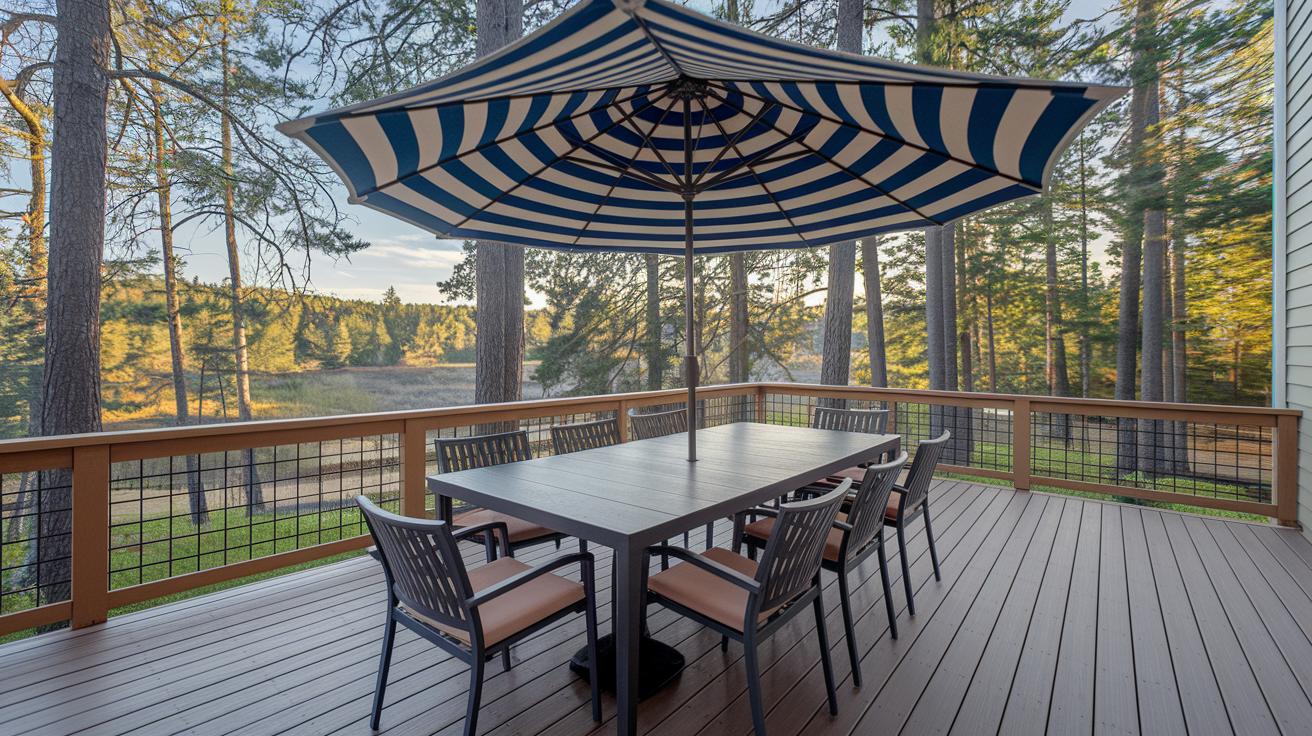
Plan a dining area that draws people in and gives you plenty of room to move. Pick a table that fits your deck size. A rectangular table, about 72 in (183 cm) long by 37 in (94 cm) wide, makes it clear where everyone sits. An oval table, with its soft curves, works well if you have other outdoor features. Choose armless chairs to keep the view clear and the area feeling airy. Instead of an outdoor rug that is hard to clean, use a striped umbrella for shade and a splash of color.
Table Shapes
Rectangular tables work well if you have enough space for several chairs. They give a neat, structured look that fits straight-edged decks. Oval tables have rounded edges that suit smaller or uneven spaces. They help you move around without bumping into corners. For example, if your deck has a tight doorway or fixed planters, an oval table can ease traffic and create a more pleasant dining area.
Seating Options
Mix seating styles to boost comfort and save space. Use armless chairs for a simple look. You can also add benches along one or both sides of the table. Benches save space and can even hold plants to brighten up your deck. This mix works well for larger groups and keeps paths clear for easy movement.
Seasonal Deck Furniture Layout Tweaks
Give your deck a fresh look with small changes that match the season. In spring, pick light colors and pastel cushions to echo blooming flowers. Add throw pillows and decorative touches that bring in a sense of renewal and brightness.
In summer, choose sturdy Adirondack chairs with a bar cart or counter-height seating for outdoor socializing. Place a large umbrella in a smart spot to offer midday shade and add a striking look to your seating area. These choices blend style with practicality for hot weather.
When fall comes, go for deep-seated sofas paired with warm blankets and a fire-pit table. This setup invites cozy chats on cool evenings. Hang lanterns around the deck to create a soft glow that fits the rustic feel of the season.
For winter, use weather-resistant sofas and chairs with thick cushions to keep the space comfortable in the cold. Add festive string lights to brighten the shorter days. These careful updates in fabrics and accessories help your deck feel inviting all year long.
Styling and Finishing Touches for Outdoor Deck Layouts
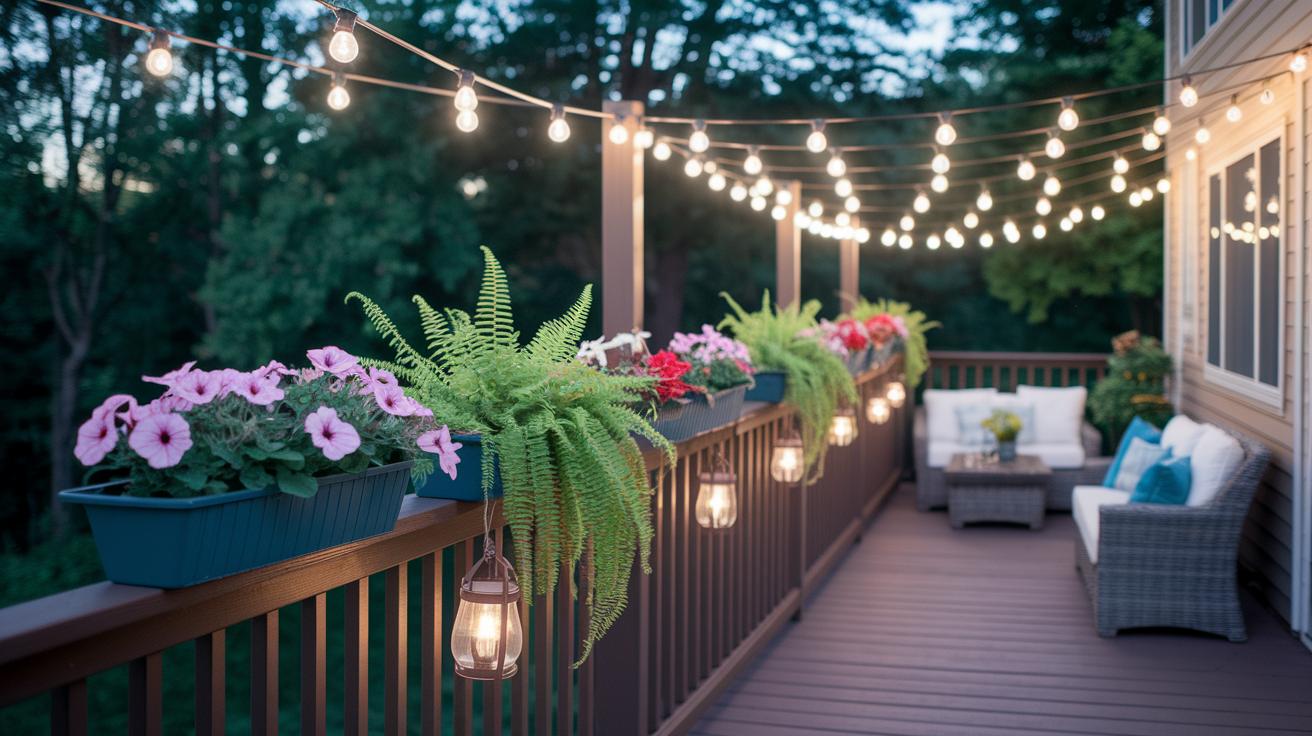
Add railing planters and potted plants to soften your deck's edges. For example, consider lining your railing with bright petunias and lush green ferns. These simple touches bring color and a natural flow to your space.
Hang lanterns or string lights above or along your railings to create a warm, inviting mood. Imagine soft lantern light glowing over a small seating area, making it perfect for relaxed after-dinner chats. Draped string lights add a festive look without using extra space.
Layer cushions, throw pillows, and textiles in matching tones and patterns to pull the design together. Mix textured fabrics with solid colors for a balanced look. A simple tip: pair patterned pillows with a few plain covers, much like mixing flavors in your favorite dish so that every piece enhances the overall style.
Install a DIY pallet sign or decorative wall art for a personal touch. You might create a sign that reads "Chill Zone" or hang weatherproof art near your seating area as a fun conversation starter. These finishing details bring all your zones together while reflecting your unique taste.
Furniture Selection and Traffic Flow Tips for Deck Layouts
Measure your deck carefully before you start planning. If you have a small deck, try spacing seating in a staggered or offset pattern. Leave about 2–3 ft (61–91 cm) of clear space around tables and chairs so people can move around easily. For example, tilting a dining table can open up extra room.
Place benches near dining areas to free up chairs for extra guests. This design works well on compact decks and lets you adjust your seating when the weather changes.
Choose outdoor furniture that stands up to the weather and can be moved when needed. For cooler days, deeper seats provide comfort, and modular pieces are great for sunny weather. Also, clear walkways not only improve flow but can serve as emergency exits.
| Furniture Type | Price Range | Best Use |
|---|---|---|
| Adirondack Chairs | $219–$249 | Casual lounge corners |
| Yacht Club Rocking Chairs | $259–$299 | Cozy relaxation spots |
| Yacht Club Bench (60″) | $469–$539 | Modular seating and dining border |
| Rockport Club Chairs | $939–$1,119 | Deep-seating conversation areas |
Final Words
In the action, we walked through deck planning, measuring spaces, and creating separate zones for dining, lounging, and more. We discussed how modular seating and smart layout choices can boost your deck's appeal. Each section helped you see how to blend function with style. By following these outdoor deck furniture layout ideas, you can create a clear, inviting space that fits your budget and schedule. Enjoy each step as you bring your outdoor living space to life!
FAQ
Q: What are small outdoor deck furniture layout ideas?
A: The small outdoor deck furniture layout ideas focus on maximizing space with modular pieces and efficient traffic pathways. They help you create seating and dining zones that suit compact areas.
Q: What are large outdoor deck furniture layout ideas?
A: The large outdoor deck furniture layout ideas let you divide the deck into clear zones like dining, lounging, and bar areas. They ensure ample space for movement and distinct functional spots.
Q: How do you plan a 12×20 deck furniture layout?
A: The 12×20 deck furniture layout plan involves measuring carefully and dividing the area into different zones. Modular sections and clear walkways create a comfy and flexible setup.
Q: What is a patio furniture layout tool used for?
A: The patio furniture layout tool is used to plan and arrange outdoor furniture by mapping dimensions and zones. It simplifies visualizing spaces and adjusting placements within your patio.
Q: What are small patio furniture layout ideas?
A: The small patio furniture layout ideas emphasize practical arrangements using multi-purpose pieces that save space. Keeping clear walkways and designated zones allows for efficient and cozy outdoor settings.
Q: What are covered patio furniture layout ideas?
A: The covered patio furniture layout ideas focus on optimizing sheltered areas with zones that balance sun and shade. Arrangements that blend seating and dining create inviting and functional outdoor rooms.
Q: What are large deck furniture layout ideas?
A: The large deck furniture layout ideas support the creation of distinct areas such as lounge, dining, and entertaining spots. Strategic zone division and ample spacing improve flow and comfort.
Q: How do you design a 12×16 deck furniture layout?
A: The 12×16 deck furniture layout design involves measuring the space and planning zones based on functional needs. Using modular seating and ensuring clear pathways results in a practical and stylish deck.