Ever wonder if a few basic tools can turn a simple project into a true work of art? Many new woodworkers find that using good, simple tools sparks creativity and builds confidence. With the right essentials, your projects can look neat and professional even on a tight budget. In this guide, we show you which woodworking tools beginners need and explain why they matter. Get ready to build your skills and turn plain pieces of wood into lasting creations.
Key Essential Woodworking Tools Every Beginner Needs

Starting with the right tools can make woodworking much easier and more fun. When you have a basic set of quality tools, your projects turn out neat and precise – even if you're on a budget. Using the right tools gives you the confidence to work on any challenge.
You don't need to spend a lot to get great results. Tools usually fall into five groups: must-have, should-have, could-have, project-specific, and nice-to-have. This way, you can slowly build your workshop and keep costs down while still getting started on basic projects. Many experts agree that focusing on exact cuts and measurements lets you create work that looks professional.
Buy your tools based on what you need now and what you plan to do later. This plan helps you decide where to invest first and which tools you can add later. Here are the top five must-have tools for getting started right away:
- Cordless drill – great for driving screws and drilling pilot holes.
- Chisel set – helps you make clean cuts for joints and shaping details.
- Hand saw – perfect for straight cuts and sizing boards.
- Tape measure & combination square – ensures your measurements and layouts are accurate.
- Random orbital sander – smooths surfaces nicely before you stain or paint.
Must-Have Hand Tools for Beginner Woodworkers

Hand tools are the core of woodworking. They help you build skills like precision and control while letting you work closely with the wood. Each cut teaches you how the wood behaves and shows how your technique changes the final piece. Using these classic tools gives you confidence to join pieces, shape curves, and smooth surfaces without always using power tools.
- Chisel set – This set has 6 very sharp chisels. They help you carve clean joints such as dovetails.
- Japanese saw trio – This group includes a ryoba, a dozuki, and a flush-cut saw. They are great for precise cuts and accurate measurements.
- Block plane & smoother – These two tools work together to remove rough spots and even out wood surfaces, making them ready for finishing.
- Spokeshave – Use this tool to shape curves and detailed contours. It lets you form smooth, natural shapes with careful guidance.
- Compass & caliper – This pair helps you mark and check measurements before you start cutting.
Regular practice with these tools will sharpen your skills and deepen your understanding of wood. Each cut and mark is a chance to learn more about working with wood. Try different angles and pressures until your hand moves feel natural. Starting with these basics builds a strong foundation for more advanced techniques later on.
Basic Power Equipment for Novice Woodworkers
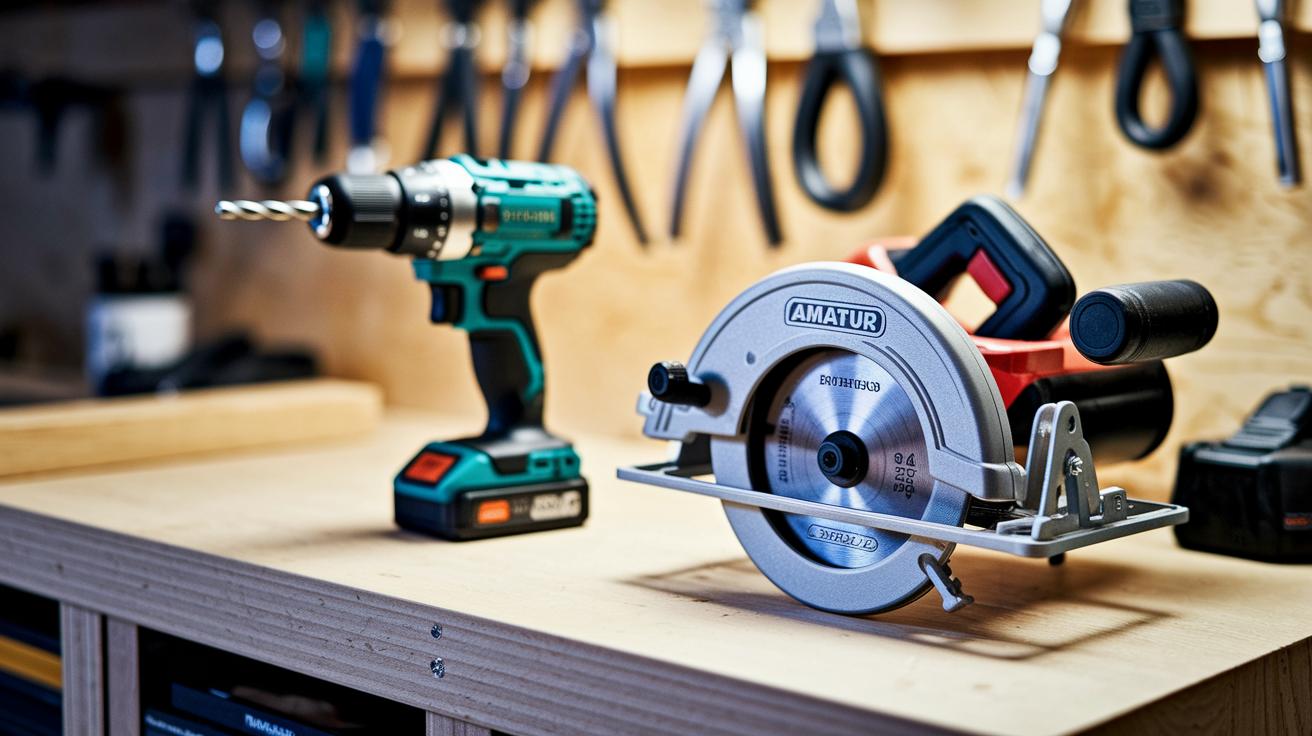
Power equipment helps you work faster and with less strain. These tools let you cut, drill, and finish projects with ease so you can focus on design and creativity.
- Cordless drill – This tool is great for driving screws and drilling holes. It is useful for woodworking and everyday tasks.
- Compound miter saw – This saw makes clear crosscuts and angled cuts. It is a top pick even for beginners who want precision.
- Random orbital sander – This sander smooths wood surfaces quickly. It gets boards ready for staining or painting by removing rough spots.
- Circular saw – Use this saw for straight cuts in large boards or sheets. It is built to handle heavy cutting jobs.
- Jigsaw – This tool lets you cut curves and intricate shapes, giving you more design freedom than a circular saw.
- Brad nailer – This tool speeds up joining pieces together. It is a handy substitute for a traditional hammer and nails.
Each of these tools adds efficiency and flexibility to your shop. Try different materials and techniques to see what works best for you. For more ideas and to hone your skills, check out the DIY projects for beginners at alphapix.org?p=80.
Advanced Layout Tools and Precision Techniques
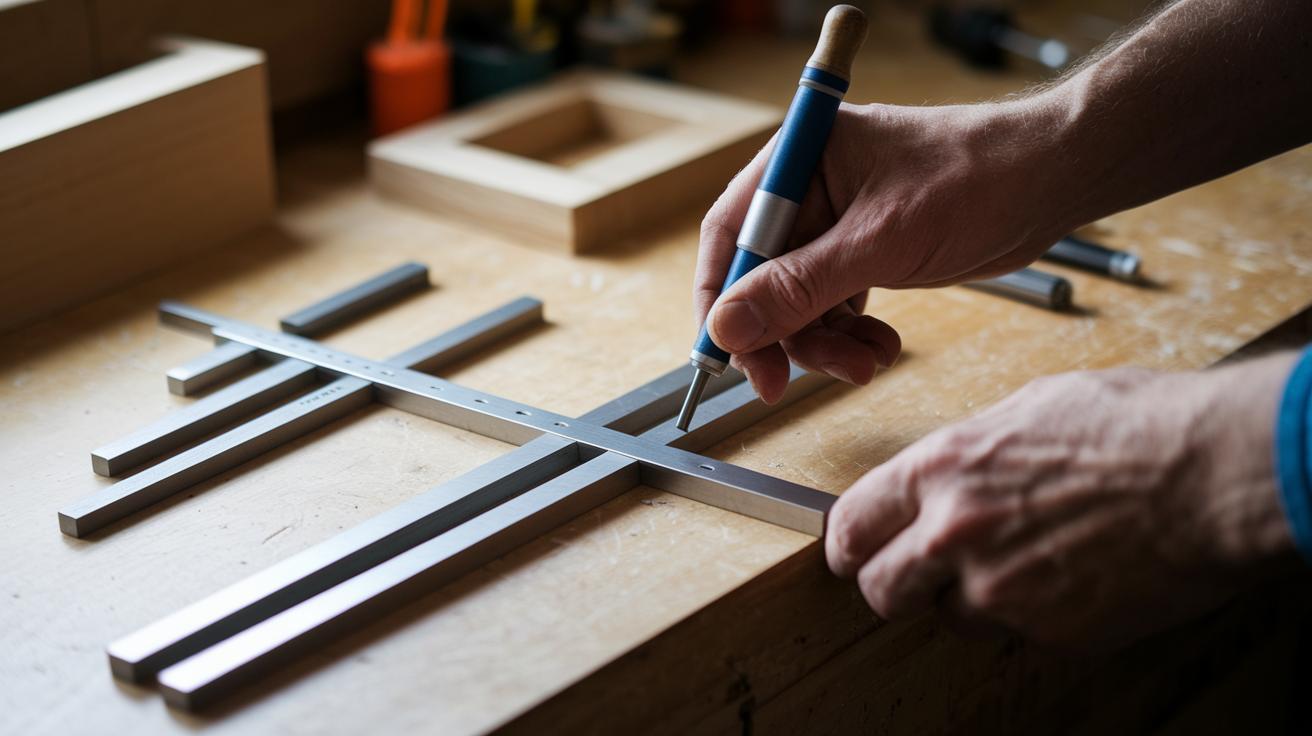
Once you’ve mastered basic marking and measuring, it’s time to upgrade your tools for detailed joinery and custom angles. These advanced tools help you work more accurately and save time by making your measurements repeatable.
- Combination square – Use this to check angles at 90° and 45° and to measure depth so your layout lines on panels stay true.
- Marking gauge – This tool lets you mark mortise and tenon lines over and over, ensuring your joinery stays consistent.
- Straightedge – Rely on a straightedge as a steady guide for drawing and checking long, straight lines on large panels.
- Sliding bevel – Use this tool to transfer complex angles from your plan to your workpiece. It’s ideal when you need to make non-standard cuts.
Before you begin cutting, take a few minutes to check that all your tools are set right. Look over your combination square and marking gauge for any wear. Ensure your straightedge sits flat against your workpiece and adjust the sliding bevel as needed. These simple checks help keep your layout accurate, reduce mistakes, and build your confidence.
Beginner Workshop Setup and Workbench Accessories

Pick a dedicated spot in your home where you can work without interruptions. Choose a place with natural light or add bright, energy-saving lamps so you can clearly see your projects. A clear workspace helps you stay organized and keeps you safe. If you don’t have room at home, look into community woodshops for a shared space.
Your workbench is the heart of your workshop. Use a sturdy bench and add handy tools like bench dogs (small pegs to hold workpieces) and a bench vise (a clamp to secure your projects). These tools keep your material steady while you cut, sand, or join pieces. Arrange your tools and materials so they are easy to reach and the area stays clutter-free.
Add an outfeed table to support longer pieces during cuts and transfers. A simple table built from basic materials like plywood and lumber can help prevent damage from unsupported ends. This extra table boosts safety and improves the accuracy of your cuts with every project.
Safety and Maintenance: Tool Safety Guidelines for Beginners
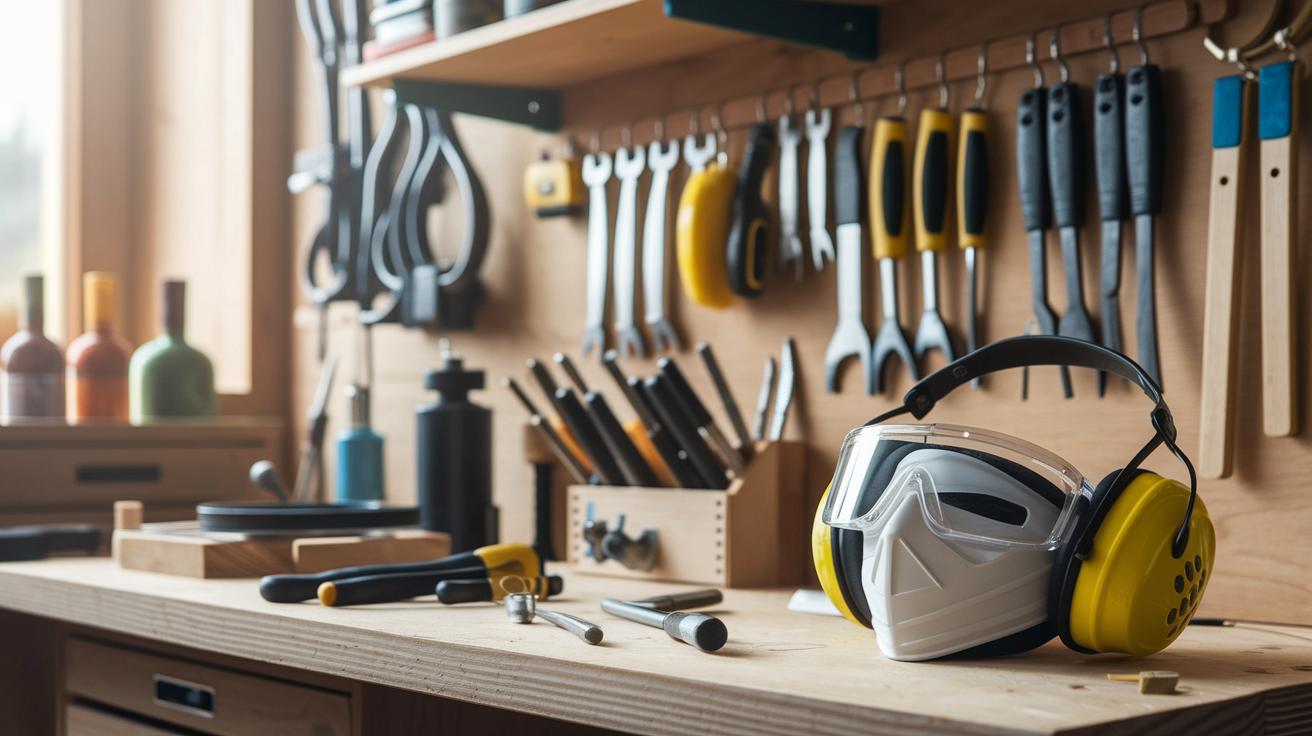
When you start a woodworking project, always wear your safety gear. Make sure to put on your safety goggles, ear protectors, and a dust mask. Follow the shop rules: tie back long hair, secure loose clothing, and keep your work area neat. Read the tool instructions before you use them and pick the right tool for each job. Check your tools for damage and keep your hands clear of any moving parts.
Keep your tools in good shape with regular upkeep. Sharpen blades as soon as they seem dull. After each work session, clean off dust and debris, and lubricate any moving parts if the instructions say to do so. Store your tools in a dry, secure place and inspect them often for signs of wear. Doing this not only extends the life of your tools but also makes your workshop safer and more efficient.
Budget-Friendly Starter Kits and Recommended Brands

Buying a starter kit is a smart move for anyone new to a workshop. These kits bring together must-have tools at a lower cost, so you can dive into projects without breaking the bank. When you choose a kit, you also save time since all your tools are meant to work well together. For example, picture getting a cordless drill, a chisel set, a hand saw, a tape measure, and a random orbital sander in one go. This way, you can start your work immediately while keeping quality intact.
Several brands make kits that are perfect for beginners and keep things affordable. One popular option even includes the Kreg Jig K4, which helps a lot with building furniture. Other brands offer packages that mix power tools and hand tools, chosen by experts to meet most needs for simple woodworking. These kits are planned with the beginner in mind. They stick to what you really need without extra items, yet give you flexible and useful tools.
When you shop around, compare prices and warranty details. Check that the kit comes with a clear manual and a detailed parts list so you know exactly what each tool does. Also, read customer reviews and see if local stores offer good prices and reliable support for those just starting out.
Final Words
In the action, we broke down tool selection into clear categories, from must-have to project-specific. We covered both hand tools and power equipment so you can build confidence at every step. Our guide shows how a smart framework eases decision-making while keeping projects on budget and safe.
Remember that investing in essential woodworking tools for beginners builds practical skills and sets you up for success. Stay safe, plan well, and enjoy the process as your projects come to life.
FAQ
What are the best essential woodworking tools for beginners?
The best essential woodworking tools for beginners include a cordless drill, chisel set, hand saw, tape measure with a combination square, and a random orbital sander. These tools offer versatility and accuracy on most projects.
What basic woodworking power tools should beginners have?
Basic woodworking power tools include a cordless drill, compound miter saw, random orbital sander, circular saw, jigsaw, and brad nailer. They boost efficiency and accuracy for a wide range of project cuts.
What essential woodworking hand tools are needed?
Essential woodworking hand tools include a chisel set, Japanese saw trio, block plane, spokeshave, and a compass with caliper. They help with precise joinery, shaping, and smooth surface finishing.
What basic tools do I need to start woodworking?
To start woodworking, you need five basic tools: a cordless drill, chisel set, hand saw, tape measure with a combination square, and a random orbital sander. These form the core of a beginner’s toolkit.
What are the 9 essential woodworking joints?
The 9 essential woodworking joints include the dovetail, mortise and tenon, box joint, lap joint, miter joint, biscuit joint, dowel joint, rabbet joint, and half-lap joint. Each provides reliable strength and unique style.
What beginner woodworking projects can I start with?
Beginner woodworking projects include simple shelves, picture frames, birdhouses, benches, or small storage units. These projects build foundational skills and boost confidence for more complex builds later.